Before the First Clove — Preparing the 2027 Field
Preparing the Ground
Before the First Clove
“The soil is the great connector of lives, the source and destination of all.” — Wendell Berry
Our last post ended with a simple thought: every great harvest begins long before the first clove is planted.
It begins with the land.
This season, we’re taking that idea quite literally.
For our 2027 crop, we’re moving our growing operation entirely—to neighboring Greenbank, where we’ve found a piece of long-established pasture and an opportunity to put soil building, soil conservation, and careful land stewardship at the center of how we grow.
It also brings our garlic closer to the horses.
That may seem like an unlikely connection, but increasingly, we see the two as part of the same agricultural system. The horses produce manure and soiled bedding. Through hot composting and the work of red wiggler worms, this raw material is transformed over time into a rich, biologically active soil amendment: vermicast (worm castings). That amendment returns to the land. And eventually, that land grows food.
There is something wonderfully elemental about that cycle.
For us, it also represents a growing conviction about what it means to raise garlic responsibly.
Alliums ask something unusual of the people who grow them. Several of the diseases that affect garlic can persist in soil for years, even long after the crop that introduced them is gone. What happens in a garlic field, in other words, can matter far beyond a single harvest.
That makes field history important. It makes clean planting stock important. It makes rotation important. And it makes caring for the soil not simply a question of what we can take from it this season, but what condition we leave it in for the seasons and growers that follow.
So before a single clove goes into our new ground, we’re beginning with the soil.
The field has been in pasture, and we’re preparing it without immediately turning it over. First, we spread a light layer of vermicast across the existing vegetation, not as a heavy fertilizer application, but as a biological inoculant and source of organic matter. Then we added water.
After an unusually dry spring and summer, even that simple act felt significant.
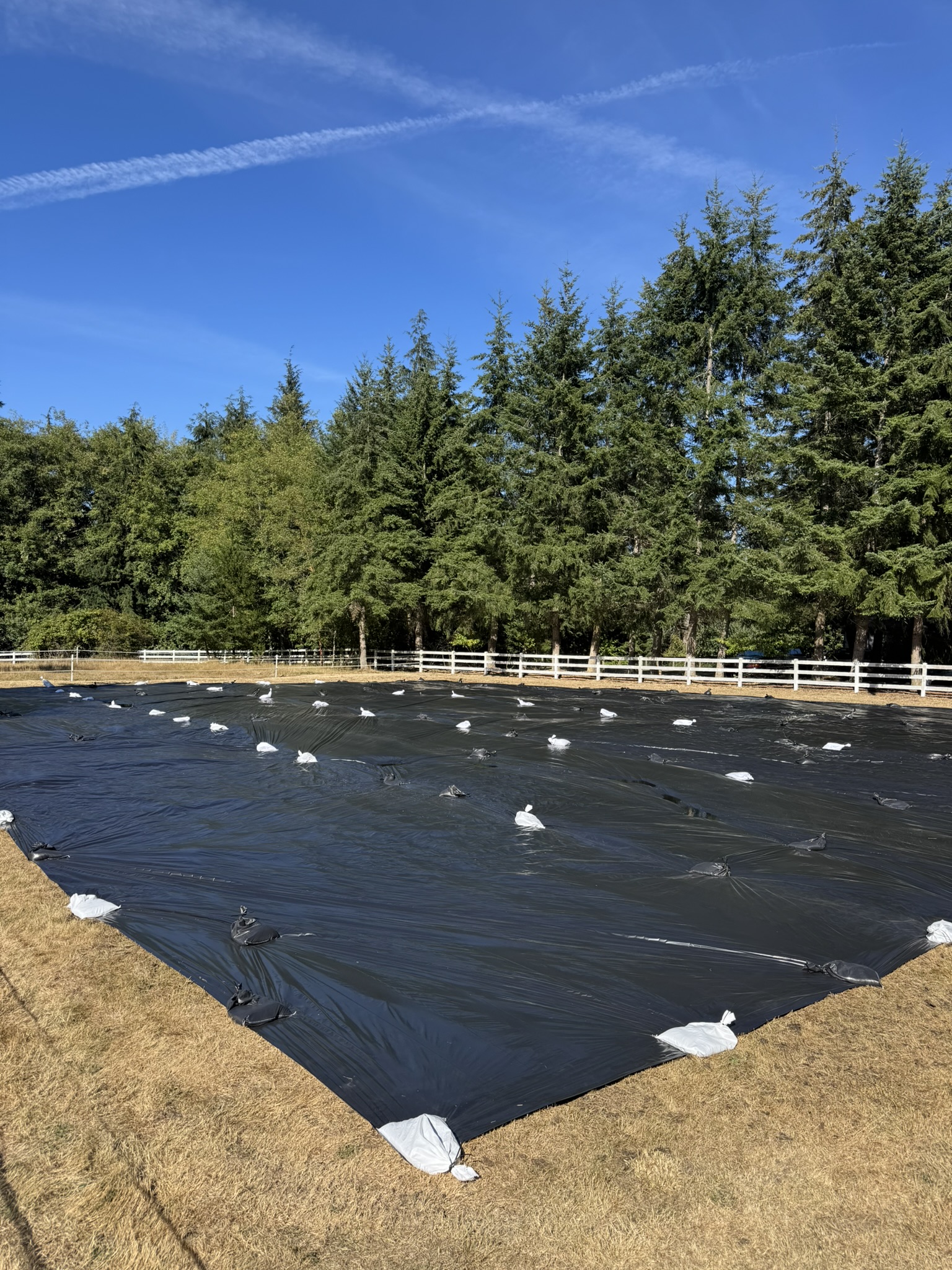
Then we covered the field.
The process is called occultation: excluding light from the soil with a black tarp for an extended period. Without sunlight, the existing pasture and weeds begin to die back. Instead of removing all of that vegetation, we’re inviting the soil microbes to help us recycle it.
The grass becomes carbon. Roots and plant residues begin to decompose. The moisture we’ve added stays beneath the tarp rather than disappearing quickly into the summer air. Bacteria, fungi, earthworms, and countless other soil organisms begin working on the organic material already there.
In a sense, we’re waking up a very dry field, and then feeding it with what it already grew.
That’s one of the things we find most compelling about this process. We aren’t trying to strip the field clean before we begin farming it. We’re trying to preserve what is valuable, return organic material to the soil, suppress the existing weed seed bank, and disturb the soil structure as little as we reasonably can.
Over the coming years, we hope to build on this foundation through thoughtful rotations, cover crops, compost and vermicast, minimal soil disturbance where possible, and careful attention to what the soil is telling us. Garlic will occupy the ground for a season; other crops and covers will follow. Then garlic will return.
The goal isn’t simply to maintain this piece of land. We want it to become better because we farmed it.
More resilient. More biologically active. Better structured. Better able to hold water and cycle nutrients. A soil capable of supporting the kind of garlic we want to put on someone’s table.
And that brings us back to where we started.
Long before harvest. Long before green shoots break through the ground. Long before we press the first clove into the soil.
It begins with the land.
Heritage Porcelain Garlic. Rooted in soil stewardship.